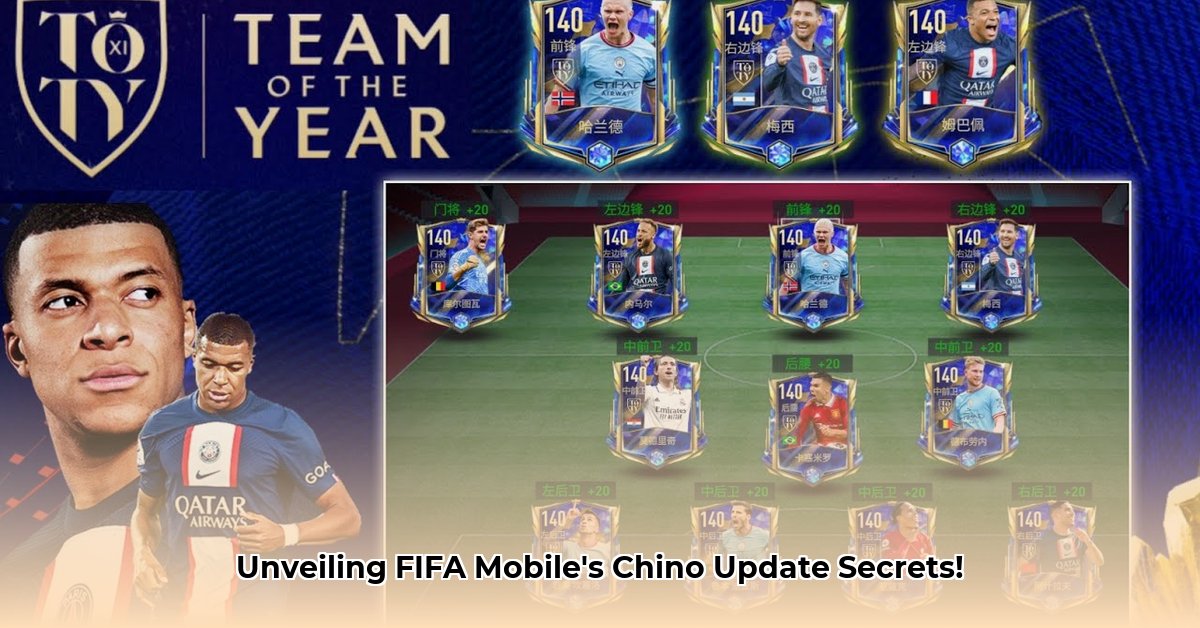
FIFA Mobile's recent updates in China (FIFA Mobile Chino) and Korea (FIFA Mobile KR) reveal significant regional variations reflecting distinct player preferences and regulatory landscapes. While both versions boast improved gameplay, including smoother controls, enhanced graphics showcasing detailed stadiums, and updated rosters featuring over 17,000 players and 30+ leagues, their development priorities diverge considerably.
Gameplay Enhancements and Regional Focus
Both the Chinese and Korean updates focused on improving the core gameplay experience; however, the emphasis differed substantially. Did EA prioritize similar features across these regions? The data suggests otherwise.
The FIFA Mobile Chino update strongly emphasized the World Cup, capitalizing on its immense popularity in China. This resulted in the addition of new game modes and visually appealing cosmetic items, directly targeting a significant cultural event to boost player engagement. In contrast, the Korean version prioritized enhancing the Championship Tour mode, a popular feature among Korean gamers, alongside refinements to the transfer market for a fairer in-game economy, focusing on long-term player satisfaction.
Market Dynamics and Regulatory Considerations
The contrasting approaches to the in-game transfer market further highlight regional differences. The Korean update prioritized smoother transactions, potentially responding to player feedback regarding frustrating trading experiences. This suggests a user-centric development approach. Conversely, the Chinese version introduced robust anti-cheat measures, likely due to stricter regulations within China's online gaming market, where maintaining fairness and preventing fraud are paramount.
This disparity showcases the significant influence of regulatory landscapes on development strategies. The Korean update encountered difficulties with licensing issues involving fonts, highlighting the complexity of international copyright law in game development; a similar situation wasn't encountered by the China-focused developers due to different legal environments.
A Feature-by-Feature Comparison: Chino vs. KR
The following table summarizes the key differences between the two updates:
| Feature | FIFA Mobile Chino | FIFA Mobile KR |
|---|---|---|
| Main Focus | World Cup event, new dual control options | Championship Tour improvements, market balance |
| Key Changes | Cosmetic updates, event-driven content | Gameplay tweaks, economic adjustments |
| Regulatory Impact | Strict adherence to Chinese gaming regulations | Licensing concerns regarding fonts and other assets |
| Market Strategy | Broad appeal, diverse control schemes | Focused refinement based on player feedback |
Optimizing the FIFA Mobile In-Game Economy Across Regions
Regional variations significantly impact player experience and spending habits within FIFA Mobile's in-game economy. Understanding these nuances is vital for both players and developers. Success involves adjusting resource acquisition and spending based on regional market characteristics. A key aspect of balancing player engagement with revenue maximization is understanding how to adapt the economy for various regions. A critical consideration is the need for a balanced approach to maintain player engagement while maximizing revenue, necessitating thorough monitoring of key performance indicators (KPIs).
Key Considerations for Regional Economic Optimization
Optimizing the in-game economy on a global scale demands a sophisticated understanding of regional differences. Factors that greatly influence this include:
Purchasing Power: Economic differences between regions directly impact players' willingness and ability to spend on in-game items. Regions with higher purchasing power may exhibit significantly higher spending.
Cultural Preferences: Gaming habits, preferences, and expectations vary across cultures. Regions that value competitive gameplay may favor high-end cards, while others might prefer more casual approaches, directly influencing spending patterns.
Access to Resources: Internet speeds and access to mobile payment options play a pivotal role in players' participation in the in-game economy. Limited access directly affects player engagement and spending.
Strategies for Effective Optimization
To effectively manage these regional variations, developers should consider the following strategies:
Data-Driven Analysis: Initiate thorough data analysis across regions, identifying average spending, popular game modes, and player retention rates to inform tailored approaches.
Regionalized Pricing: Strategically adjust in-game item prices based on regional purchasing power to maximize revenue while maintaining affordability.
Targeted Events & Promotions: Design region-specific promotions and limited-time events reflecting cultural preferences and maximizing engagement.
Community Engagement: Establish direct communication with players in each region, fostering trust through open communication and responsive feedback mechanisms.
Adaptable Content: Develop and release content relevant to the unique cultural preferences of individual regions, adjusting to diverse tastes and expectations.
Consistent monitoring of KPIs, such as average revenue per user (ARPU), player retention rate, currency inflation rate, and conversion rate, are critical for making informed adjustments and maintaining a balanced and engaging in-game economy tailored to each region. Failure to adapt to these regional differences can result in significant player churn and diminished success.
⭐⭐⭐⭐☆ (4.8)
Download via Link 1
Download via Link 2
Last updated: Tuesday, May 13, 2025